Endometriosis is not “bad cramps.” It’s not “stress.” And it is never “normal.” It is a chronic inflammatory disease where endometrial-like tissue grows outside the uterus, sometimes invading the bowel, bladder, ureters, and even pelvic nerves. More than 190 million women worldwide live with it — and many spend years being dismissed or misdiagnosed. 🌍 …

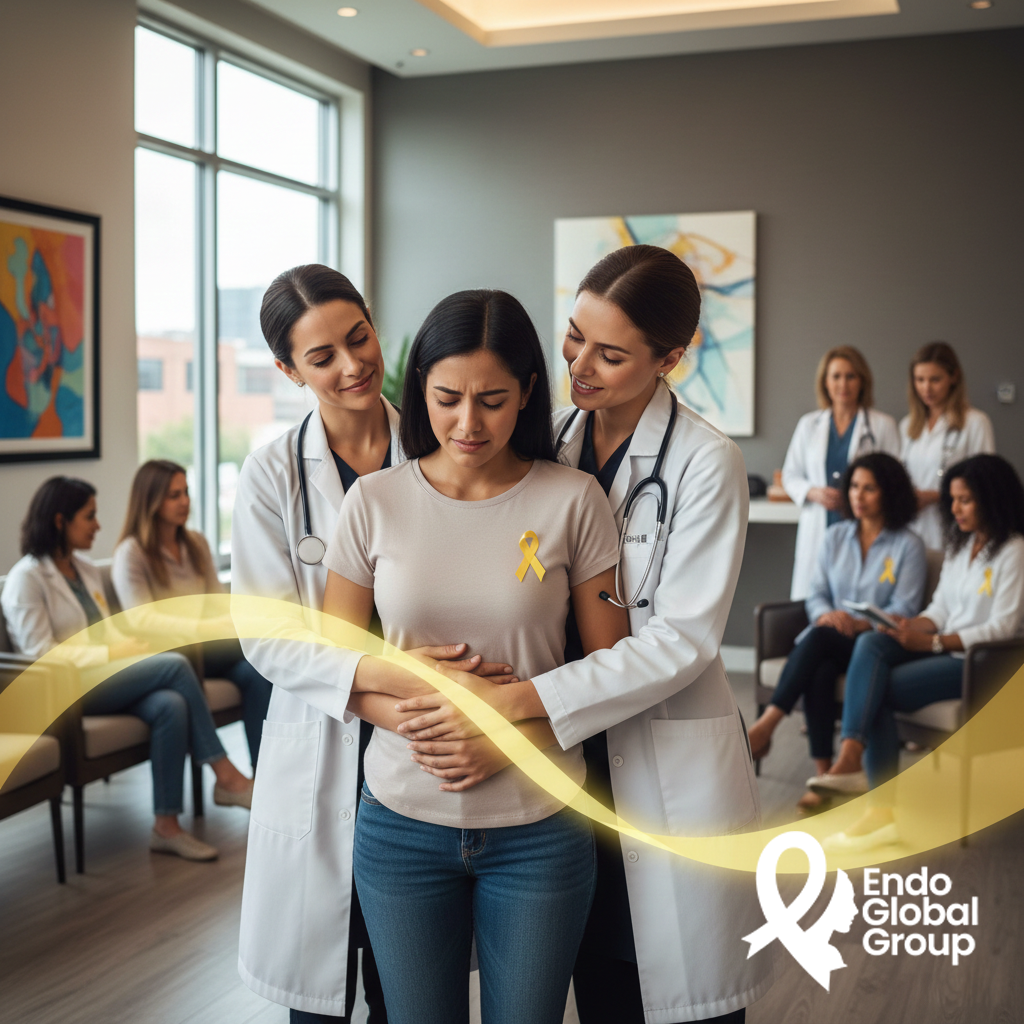
Endometriosis is not “bad cramps.”
It’s not “stress.”
And it is never “normal.”
It is a chronic inflammatory disease where endometrial-like tissue grows outside the uterus, sometimes invading the bowel, bladder, ureters, and even pelvic nerves.
More than 190 million women worldwide live with it — and many spend years being dismissed or misdiagnosed.
🌍 When your body screams and no one listens
Endometriosis shows up in many ways, often far beyond the reproductive system:
severe menstrual pain
chronic pelvic pain between periods
rectal pain or bleeding with bowel movements
constipation, diarrhea, bloating
pain with intercourse
urinary pain or blood in urine
crushing fatigue
infertility or pregnancy loss
Most patients wait 7 to 10 years for a correct diagnosis.
That delay has physical, emotional, social, and professional consequences.
And every year without answers is a year without quality of life.
🏥 When the wrong surgery makes everything harder
Surgery, when done correctly, can transform life with endometriosis.
But when it is done poorly — or without proper planning — it often causes more harm than good.
A non-specialist surgery can:
❌ leave active disease behind
❌ create painful adhesions (scar tissue)
❌ injure bowel, bladder, or nerves
❌ increase pain and fatigue
❌ and make future surgery far more complex
In endometriosis, the first surgery is the most important surgery.
Because every incomplete procedure:
distorts anatomy
removes surgical planes
increases complication risk
and limits options for fertility preservation and organ-sparing techniques
This is why global centers insist:
👉 Endometriosis must be treated by surgeons who specialize in it.
🔬 Mapping the disease: see it before you treat it
Modern care has evolved.
We are no longer in the era of “exploratory laparoscopy.”
Today, accurate mapping before surgery is standard in expert centers.
Key tools include:
📌 Expert transvaginal ultrasound
Designed to evaluate:
deep infiltrating nodules
uterosacral ligament involvement
frozen pelvis or obliterated cul-de-sac
endometriomas
📌 Pelvic MRI with endometriosis protocol
Capable of detecting:
intestinal and rectosigmoid involvement
bladder or ureter infiltration
parametrium and pelvic nerve compromise
📌 Full clinical and functional assessment
Because you don’t operate a scan —
you operate a whole person with symptoms, goals, and a life.
Mapping means safer surgery, fewer complications, and fewer repeat procedures.
🤝 A full-body disease requires a full-team approach
Endometriosis does not respect anatomical boundaries.
That’s why expert care should include a coordinated team, not isolated specialists handing off a patient like a file.
An ideal surgical team may include:
gynecologic surgeon specializing in endometriosis
colorectal surgeon for bowel disease
urologist when bladder/ureters are involved
anesthesiology familiar with chronic pain biology
gastroenterology and nutrition
mental health support — because trauma is real
This multidisciplinary model is used worldwide —
from Australia and Europe to the US and Latin America —
including advanced centers like EndoGlobal Group.
🌎 EndoGlobal Group: global expertise for a global disease
Endometriosis is a worldwide challenge:
delayed diagnosis everywhere
unnecessary surgeries everywhere
women dismissed everywhere
This is why networks like EndoGlobal Group exist.
Our mission is to provide:
🔬 accurate diagnosis and detailed imaging
✂ minimally invasive, organ-preserving surgery
👥 multidisciplinary treatment in one coordinated plan
🌿 patient-centered care focused on restoring quality of life
We believe in science.
We believe in mapping before operating.
And we believe every woman deserves the best care — not just the care that happens to be nearby.
✨ A message for you
If you are reading this, know this clearly:
💛 Your pain is real
💛 You are not exaggerating
💛 You are not alone
💛 And your life still has possibility and hope
Endometriosis can be treated safely and effectively when:
✔ the diagnosis is correct
✔ imaging is done properly
✔ surgery is performed by experts
✔ and the whole body (and mind) is supported
This is what we fight for at EndoGlobal Group —
🌿 excellence + mapping + skill + humanity.
No woman should suffer in silence.
And no woman should ever be told her pain is “normal.”
📚 Brief Scientific References
ESHRE Guideline on Endometriosis (2022)
ACOG Practice Bulletin
Guerriero & Bazot — Imaging for deep endometriosis
Chapron & Roman — Surgical errors and reoperations
WHO — Global prevalence figures